
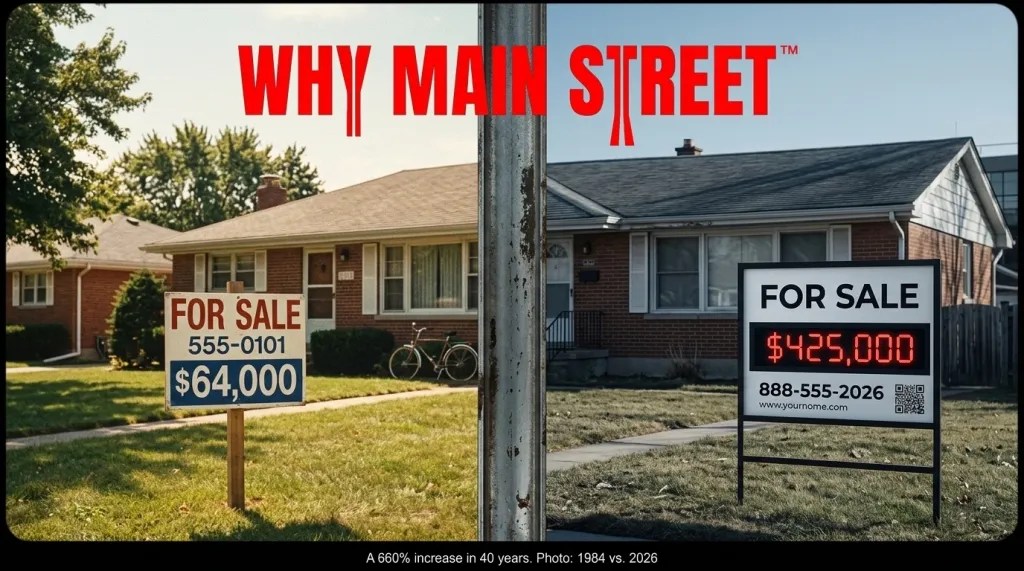
The American dream of homeownership is currently undergoing a period of intense scrutiny. For decades, the narrative of “the starter home” served as a foundational pillar of domestic stability. However, recent data audits suggest that this pillar has been systematically dismantled. According to emerging financial reports and market analysis, the properties that were once attainable for the average American worker in 1980 have been reclassified as high-value luxury assets in 2026.
This is not a matter of mere market fluctuation. It is an evidentiary shift in the very nature of real estate. Based on statements from economists and demographic researchers, the “Affordability Gap” has widened to a degree that effectively excludes a significant portion of the 18-45 demographic from the statutory right to property ownership.
The 1980 Baseline: A Notarized Look at the Past
To understand the current crisis, one must examine the notarized historical data. In 1980, the median home price in the United States stood at approximately $64,000. When adjusted for inflation to 2026 dollars, that figure represents roughly $260,000.
At that time, the price-to-income ratio: a critical metric used to gauge housing health: was approximately 3.5x. This meant that a household earning the median income could, through standard financial channels, secure a home for roughly three and a half times their annual salary. The path to ownership was a straightforward, reportorial process.
According to records from that era, the median age of a first-time homebuyer was 29. The “starter home” was not an aspirational goal; it was a baseline expectation.
The 2026 Reality: The Statutory Displacement
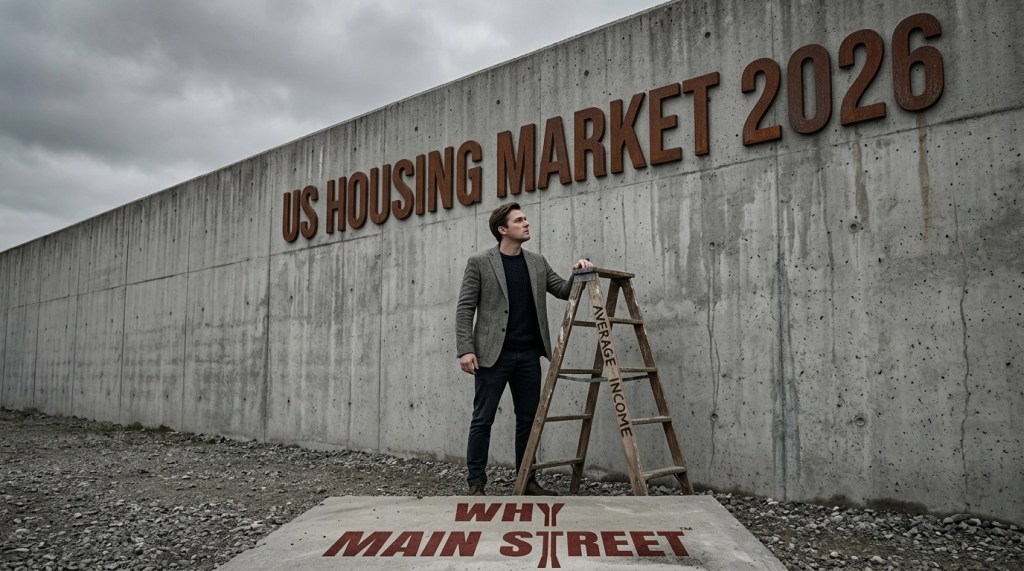
Fast forward to April 2026. The evidentiary findings are stark. Projections for the 2026 median home price place it at or above $425,000. While institutional narratives claim this is a sign of a robust economy, a deeper investigation into the price-to-income ratio reveals a different story.
Currently, the ratio has skyrocketed to between 5.5x and 6x. This is a conclusive departure from the 1980 baseline. Despite allegations that “modern amenities” or “market demand” justify these prices, the math does not align with the statutory reality of American wages.
Consider the following growth metrics since 1985:
- Median Household Income Growth: ~255%
- Median Home Price Growth: ~415%
The divergence is statistically significant. The growth in home prices has outpaced income by nearly 160 percentage points. This gap represents more than just a numbers game; it is a barrier to entry that has pushed the median age of a first-time buyer to 40.
The Tactics of Speculation
Why has housing shifted from a “basic need” to a “speculative asset”? Investigative scrutiny points toward several institutional tactics:
- Supply Shortages by Design: Statutory zoning laws and restrictive building codes have allegedly been used to suppress the inventory of affordable housing, driving up the value of existing holdings for powerful entities.
- Institutional Acquisition: Reports indicate that institutional investors and large-scale corporate entities are purchasing single-family homes at unprecedented rates. These entities utilize aggressive bidding tactics to secure properties, which are then converted into high-yield rental units or held as speculative assets.
- Disinformation and Market Hype: The narrative that real estate “only goes up” has been used to fuel speculative bubbles, positioning homes as investment vehicles rather than places of residence.

Disclaimer: Why Main Street is not a financial advisor, a bank, or a real estate brokerage. The information presented here is based on available market data and should not be construed as investment advice. All financial decisions should be made in consultation with a qualified professional.
The Squeeze on the 18-45 Demographic
The demographic currently feeling the most significant impact of this displacement consists of entrepreneurs, small business owners, creators, and professionals between the ages of 18 and 45. This cohort, often referred to as “The Builders,” is being systematically priced out of the traditional wealth-building mechanisms that benefited their parents.
When a “starter home” costs nearly half a million dollars, the down payment alone becomes a statutory hurdle that many cannot clear without significant intergenerational wealth. This has created a two-tier system of “haves” and “have-nots,” where property ownership is becoming a legacy privilege rather than a result of individual merit or labor.
The “Housing Affordability Audit” of 2026 reveals that for many, the traditional path to a legacy is conclusively blocked by institutional gatekeepers.
The Search for Truth and Collaborative Solutions
In the face of these allegations of market manipulation and the reality of the affordability gap, individuals are seeking closure and alternative routes to wealth building. The quest for truth in the financial sector has led to the rise of independent, member-owned platforms designed to bypass the traditional institutional stranglehold.
This is where Why Main Street enters the narrative.
As a member-owned social media company focused on wealth building and financial education, Why Main Street provides a platform for transparency. In an era of corporate disinformation, the community offers a space to discuss financial topics, connect with professionals, and explore collaborative networks.

The era of relying solely on the institutional “American Dream” is coming to an end. The data has been reviewed. The findings are in. The “starter home” of the 1980s has been transformed into a luxury asset, leaving the next generation to seek new ways to build their own main streets.
Join the movement for financial transparency and community-driven wealth.

Legal Notice & Liability Protection
Why Main Street (https://whymainstreet.org/) is a social media platform and financial education community. We are not a licensed financial institution, bank, or real estate agency. We do not provide statutory legal advice or guaranteed financial outcomes. All content provided is for informational purposes and reflects the perspectives of independent contributors and member-owned data audits. Why Main Street is not responsible for the accuracy of third-party reports or the performance of any external investment. Membership does not guarantee financial gain.
Stay Informed. Stay Independent.
Follow our ongoing investigations into the wealth gap and institutional tactics at Why Main Street Articles.


Leave a Reply