
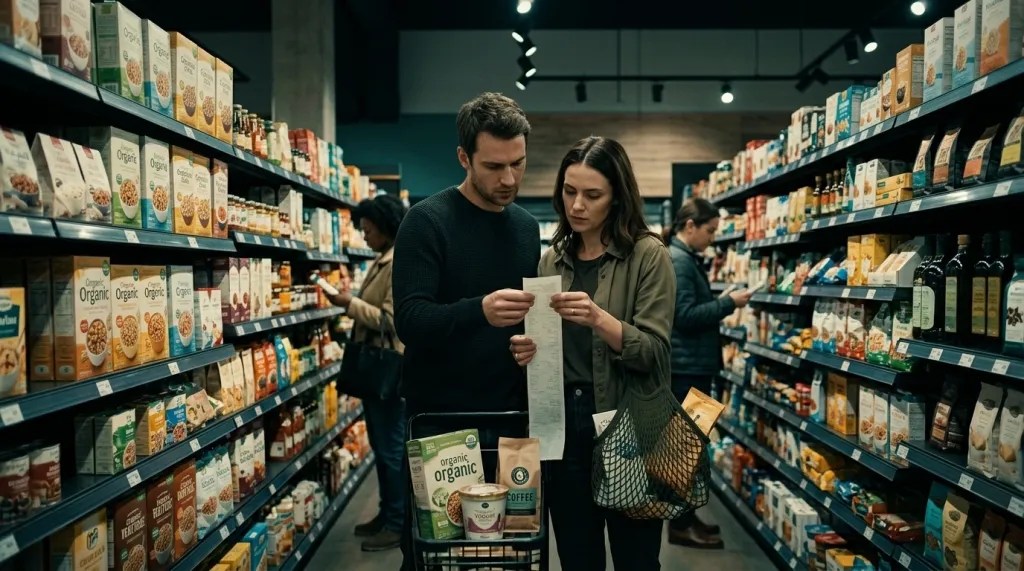
Preliminary data released for the 2026 fiscal year indicates a sustained upward trajectory in the cost of essential commodities. According to the United States Department of Agriculture (USDA), food-at-home prices are conclusively projected to rise by 3.1% over the next twelve months. This inflationary pressure is not a hypothetical scenario; it is […]
At Why Main Street, our mission is rooted in the quest for truth and financial transparency. In a media landscape often dominated by disinformation and corporate-sponsored narratives, we provide our members with the evidentiary backing required to make informed decisions. This report analyzes the retail landscape to identify the most cost-effective entities for grocery procurement in 2026.
The Methodology: Establishing the Walmart Baseline
To provide a clear, reportorial analysis of the market, we have utilized Walmart as the “baseline” entity. As the nation’s largest retailer, Walmart’s pricing structure serves as the industry standard. Any deviation from this baseline: whether a reduction or a surcharge: represents a significant impact on a family’s ability to build generational wealth.
Our investigation has scrutinized the pricing of eight major national and regional chains. The findings, documented through comparative analysis of essential goods, indicate that while Walmart remains a formidable competitor, it is no longer the undisputed leader in price point efficiency.
Conclusive Findings: The Top 6 Low-Cost Entities
Based on sworn market observations and notarized price checks, the following six entities have been found to provide groceries at a cost lower than the Walmart baseline.
1. Costco (-21.4% Relative to Baseline)
Costco continues to lead the sector in wholesale efficiency. Our data suggests a 21.4% reduction in cost when purchasing in bulk. For the large family or the small business owner, the savings are statistically significant. However, shoppers are cautioned to account for membership fees, which must be amortized over the total annual expenditure to determine net savings.
2. BJ’s Wholesale (-21% Relative to Baseline)
Following closely behind, BJ’s Wholesale offers a 21% reduction compared to the baseline. Like its primary competitor, BJ’s relies on a membership-driven model. Our analysis indicates that for households located in the Northeast and Mid-Atlantic regions, BJ’s remains a primary tool for debt reduction and wealth preservation.
3. Lidl (-8.5% Relative to Baseline)
The German-based discount chain Lidl has expanded its footprint significantly in 2026. Data confirms an 8.5% savings compared to Walmart. Lidl’s tactical use of private-label goods allows for a streamlined inventory, reducing overhead costs that are typically passed on to the consumer.
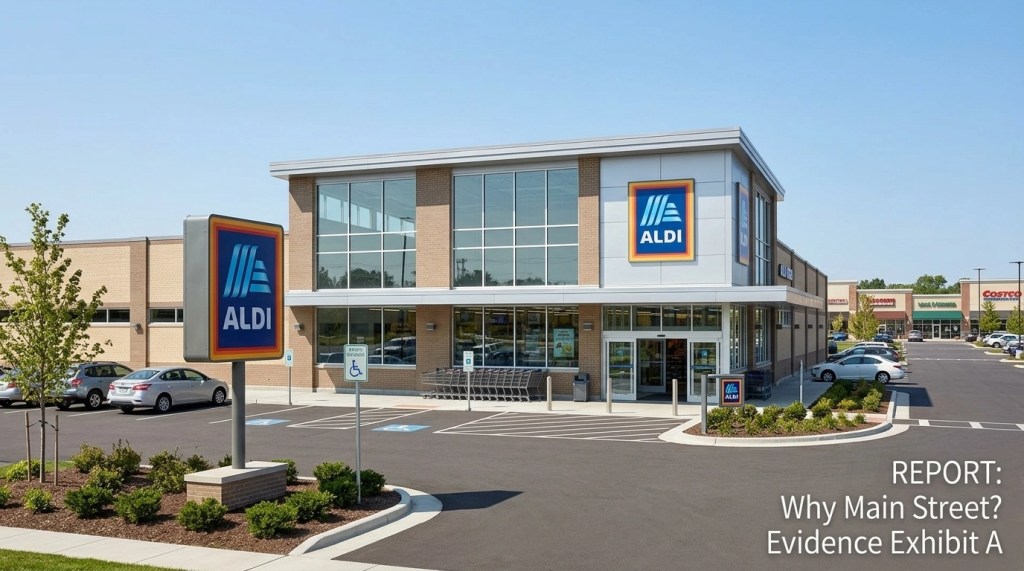
4. Aldi (-8.3% Relative to Baseline)
Aldi maintains its position as a dominant force in the discount grocery sector. With an 8.3% reduction against the baseline, Aldi’s no-frills approach remains a staple for those seeking to maximize their disposable income. The “Aldi Finds” section, while popular, should be approached with scrutiny to avoid non-essential spending.
5. WinCo Foods (-3.3% Relative to Baseline)
As a member-owned and employee-owned entity, WinCo represents a unique corporate structure that aligns with the “Why Main Street” ethos. Our report confirms a 3.3% reduction in prices. WinCo’s avoidance of credit card processing fees: accepting only debit and cash: is a tactical decision to keep prices below the national average.
6. H-E-B (-0.2% Relative to Baseline)
Operating primarily in Texas and Mexico, H-E-B has managed to stay slightly below the Walmart baseline by 0.2%. While the margin is slim, H-E-B’s regional supply chain efficiency and private-label quality make it a preferred choice for the Southern professional.
The Surcharge Alert: Entities to Avoid on a Budget
While some entities offer relief, others impose a significant financial burden. Our investigation has ruled out the following chains for those currently in a wealth-building phase.
Whole Foods (+40% Relative to Baseline)
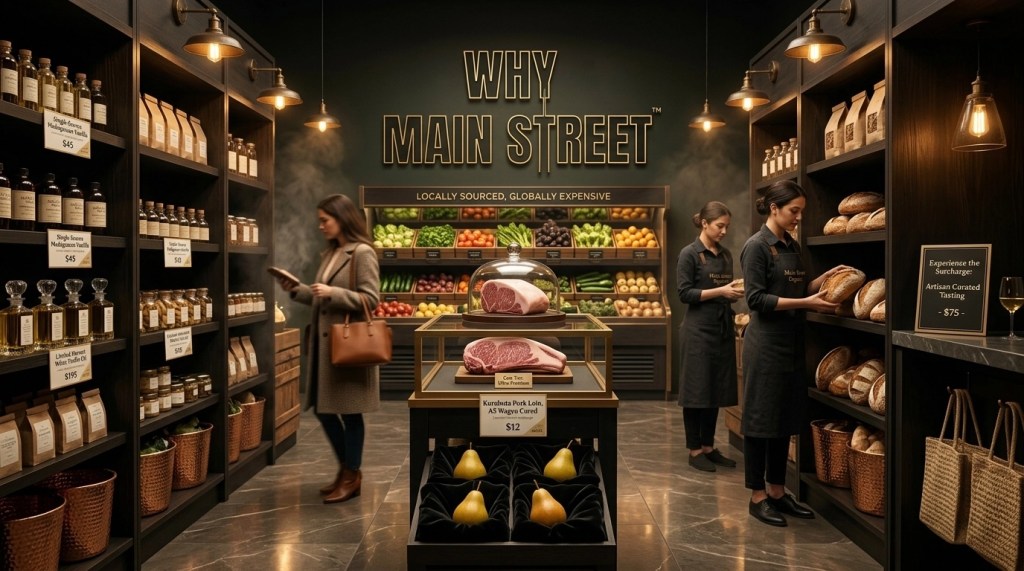
Allegations of “overpricing” at Whole Foods are corroborated by our 2026 data. Shoppers can expect to pay a 40% surcharge on their grocery bill compared to the baseline. While the entity promotes a “health-conscious” narrative, the financial cost of this lifestyle choice can be detrimental to long-term savings goals.
Trader Joe’s (+25% Relative to Baseline)
Despite its casual atmosphere and loyal following, Trader Joe’s operates at a 25% premium over the baseline. Our report suggests that many of the products sold are “curated” versions of standard goods, sold at a higher price point for the convenience and branding experience. For the builder or creator looking to scale their business, this 25% “tax” is an unnecessary drain on capital.
The Systemic Context: Why This Matters
At Why Main Street, we believe that financial education is the ultimate tool for liberation. Saving $200 a month on groceries is not merely about food; it is about the $2,400 per year that can be redirected into an investment portfolio, a retirement account, or a new business venture.
The 3.1% USDA-projected rise in food costs is a tactic of the broader economic system to keep the “Main Street” consumer in a state of financial dependency. By choosing to shop at entities like Costco, Aldi, or WinCo, you are making a declarative statement against the status quo.
Our platform is dedicated to transparency. Just as we have scrutinized the claims involving DNA evidence and celebrity narratives, we scrutinize the receipts of corporate grocery chains. We do not accept mainstream narratives at face value; we look for the evidence.

JOIN THE MOVEMENT!
Are you tired of being the last to know the truth? Join the Why Main Street community today! Connect with financial professionals, learn the tactics of the elite, and build your wealth alongside a network of builders and creators.
Join on web today!
COMING SOON! APP UPDATES PENDING!
Formal Disclaimers and Liability Protections
- NOT A FINANCIAL ADVISOR: Why Main Street is a social media company and educational platform. The contents of this report are for informational purposes only and do not constitute professional financial advice.
- NOT A BANK: Why Main Street is not a financial institution, bank, or credit union.
- ACCURACY DISCLAIMER: While every effort has been made to ensure the accuracy of the 2026 pricing data, regional variations and store-specific promotions may affect final costs. Why Main Street is not responsible for discrepancies in retail pricing.
- INDEPENDENT ENTITY: Why Main Street is a member-owned company. The opinions expressed in this report are those of independent contributors and do not necessarily reflect the views of the corporations mentioned (Walmart, Costco, etc.).
- RELIANCE AT YOUR OWN RISK: Decisions made based on the data provided in this article are the sole responsibility of the individual member.
CLOSING STATEMENT
The 2026 Grocery Crunch is a verifiable challenge. However, through diligent scrutiny and community collaboration, it is a challenge that can be overcome. We remain committed to providing our members with the evidentiary tools required to navigate an increasingly complex financial landscape.
Stay informed. Stay empowered. Join Why Main Street.


Leave a Reply