
Photo: Markroads1230 via Pixabay
A crop can look profitable in two different ways. It can sell for an unusually high farm-gate or wholesale value per pound, or it can produce a strong annualized gross value per acre once yield and time-to-harvest are accounted for.
The primary universal metric is farm-gate value per pound of sellable harvested product. That allows saffron, truffles, ginseng, specialty roots, and dried botanicals to be compared on a single unit basis. It avoids the distortion created by national production value, which mostly measures market size, not unit economics. In layman’s terms, this report focuses on price per pound.
The contrast is sharp. A commodity spice such as black pepper was quoted around $2.63 to $3.10 per pound in October 2026 trade pricing. Saffron, by contrast, was roughly $2,220.40 per pound on a U.S. unit-value basis from UN Comtrade data checked in June 2026, with market-quoted wholesale and retail reports placing it far higher. But a higher $/lb figure does not automatically mean higher profit. Tiny yields, hand labor, years to first harvest, regulation, and thin markets can erase the headline number.
That is why this article uses a transparent two-part framework:
- Primary metric: farm-gate or wholesale value per pound.
- Secondary metric: illustrative annualized gross value per acre, calculated as (marketable yield per acre × price per pound) ÷ years to first meaningful harvest.

That second figure is not an official USDA statistic. It is an illustrative screening tool built from cited inputs. USDA does not publish standardized cost-and-return budgets for most of these specialty crops, so the table below should be read as a ranking for investigation, not a business plan.
Top High-Value Crops Ranked by Value per Pound
These figures are not official profit statistics. They mix official trade unit values with market-quoted wholesale, retail, and vendor pricing because that is where most specialty-crop $/lb data actually exists.
1. Saffron
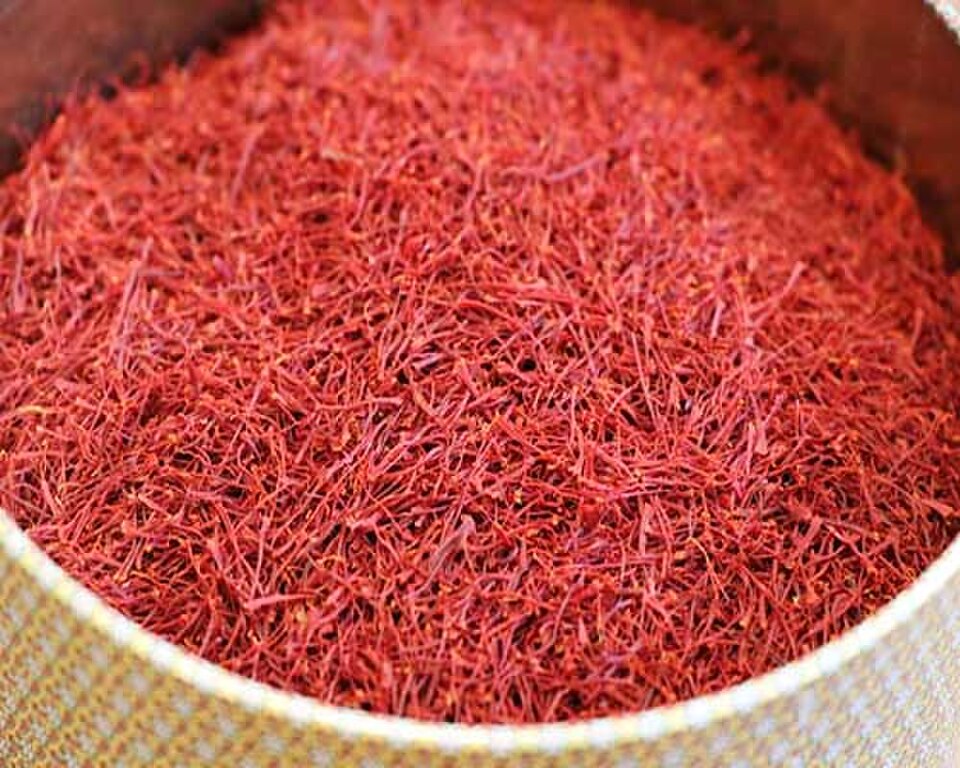
Saffron is the anchor example because it combines an extreme headline price with practical U.S. production potential on a small scale. U.S. unit-value trade data from UN Comtrade, checked in June 2026, implied roughly $4,895 per kilogram, or about $2,220.40 per pound. That is an official trade-data unit value, not a farm budget. Market-quoted wholesale and retail reporting is higher still. Selina Wamucii and other market-reporting sources commonly place saffron around $3,000 to $9,000 per pound, with some reports citing $5,000 to $10,000 per pound.
The yield reality is where the story changes. The University of Vermont saffron factsheet gives a baseline of roughly 3 pounds of dried stigma per acre at maturity. The Georgia SARE OS23-166 trial reported 59.61 grams of fresh stigma from a quarter-acre plot in 2023 and modeled $5,189 in net revenue per 0.25 acre over two years using a $32 per gram wholesale assumption. That assumption is closer to high-end retail-equivalent pricing than to bulk import values. The gap between those pricing assumptions is the single biggest variable in saffron economics.
That is why saffron tops this list while still carrying a major warning. Nothing else legal to farm in the U.S. combines a four-figure price per pound with a crop that can be grown on very small acreage in multiple climates. But the crop is labor intensive. The red stigmas are separated by hand during a 2–3 week harvest window, it takes an extraordinary number of flowers to produce a pound of finished spice, and corms must be lifted and divided. There is no deep, standardized U.S. commodity market. A grower is usually selling direct, to restaurants, or to specialty buyers.
Illustrative annualized gross value per acre: using the Vermont maturity yield of 3 lb/acre and the UN Comtrade-derived $2,220.40/lb, gross value would be about $6,661/acre before costs. At a quoted $5,000/lb, that becomes $15,000/acre. These numbers are illustrative only.
2. Truffles
Cultivated Perigord black truffles (Tuber melanosporum) are one of the few crops that can rival saffron on mystique, but not on speed. U.S. retail and vendor pricing commonly places cultivated Perigord black truffles around $800 to $1,200 per pound, with vendor offers starting near $60 per ounce, or roughly $960 per pound. Burgundy truffles (Tuber uncinatum) generally trade for materially less, often around half that level.

The sober issue is yield and time. Mature orchards are often described as producing 10 to 60 pounds per acre, and some operations report 40 to 100 pounds. But the peer-reviewed Springer Nature review, Status of truffle science and cultivation in North America, reported average yields closer to 15 kilograms per hectare, which converts to roughly 13 pounds per acre. That lower number deserves to sit beside the optimistic claims.
Production usually starts 5 to 13 years after planting inoculated trees. In the U.S., the most discussed regions include Oregon’s Willamette Valley, along with parts of North Carolina, Kentucky, Tennessee, and Virginia. LPM’s January 2026 Kentucky coverage adds a useful regional marker: interest is expanding, but the business remains orchard-specific.
The honest catch is establishment risk. The Oregon State University black truffle economics study and Missouri Extension’s truffle guide both stress the pre-productive years with no revenue, plus the cost of inoculated seedlings, irrigation, land preparation, soil management, and orchard maintenance. On a $/lb basis, truffles look extraordinary. On a cash-flow basis, they are a long-duration wager.
Illustrative annualized gross value per acre: using 13 lb/acre, a midpoint price of $1,000/lb, and 7 years to first meaningful harvest, annualized gross screens at about $1,857/acre/year equivalent before costs. That is why $/lb alone is not profit.
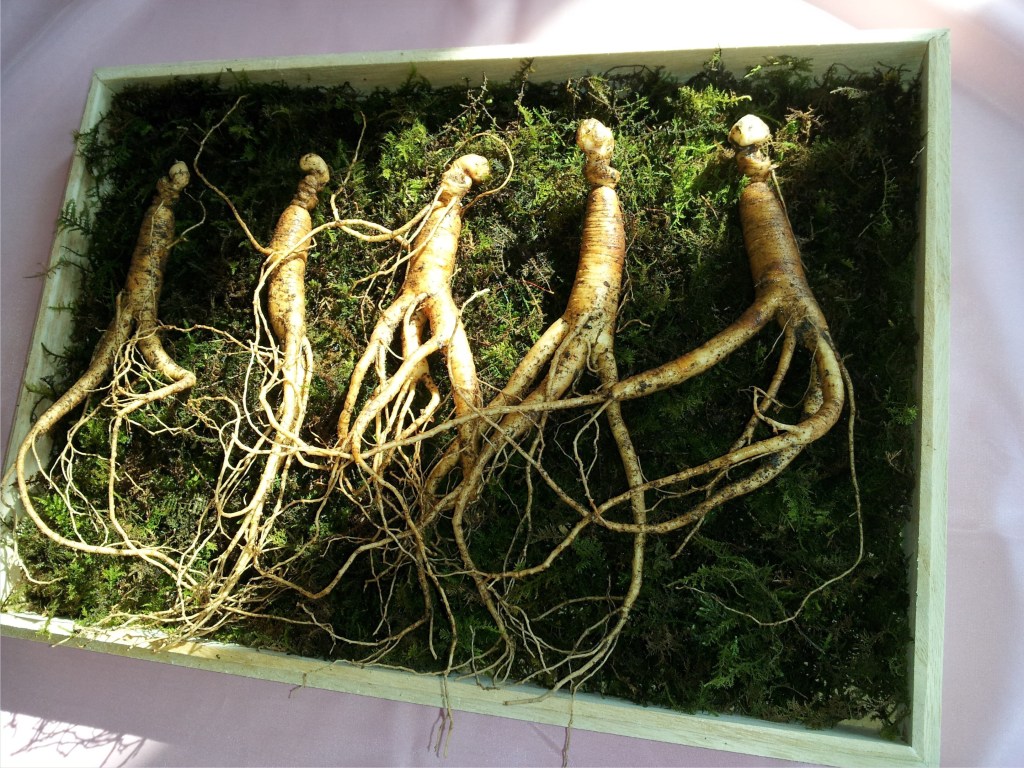
3. American Ginseng
American ginseng sits near the top because the root can command unusually high prices and because the market sharply separates cultivated product from wild or wild-simulated product. The USDA Forest Service and university extension literature make that distinction explicit. Cultivated Wisconsin ginseng is commonly quoted around $50 to $250 per pound, while Heil Ginseng farm-direct reporting in 2026 placed whole-root pricing roughly around $65 to $160 per pound. Wild American ginseng, by contrast, is often quoted in the $500 to $1,200 per dry pound range.
That pricing explains why so much discussion centers on wild-simulated forest farming rather than conventional field production. USDA Forest Service material and related forest-farming research have reported operations with net returns above $5,000 per quarter-acre depending on price, quality, and survival. But that is not a fast-turn row-crop model. The roots take years to reach marketable size, and root appearance strongly affects sale value.

Where it works is also narrow. Wisconsin remains the largest cultivated region, while Appalachian forest farming is prominent across Kentucky, West Virginia, Tennessee, Ohio, and Pennsylvania. The dominant cost and risk is time layered with regulation. American ginseng is CITES-listed. Wild harvest is regulated by season, location, plant age, certification, and state rules. No reader should interpret this as an invitation to dig wild roots casually.
Illustrative annualized gross value per acre: No single representative figure is used for ginseng because yield and root grade vary so widely between wild-simulated and cultivated production that the price-per-pound screen is more reliable than any one acre figure.
4. Dried Morels
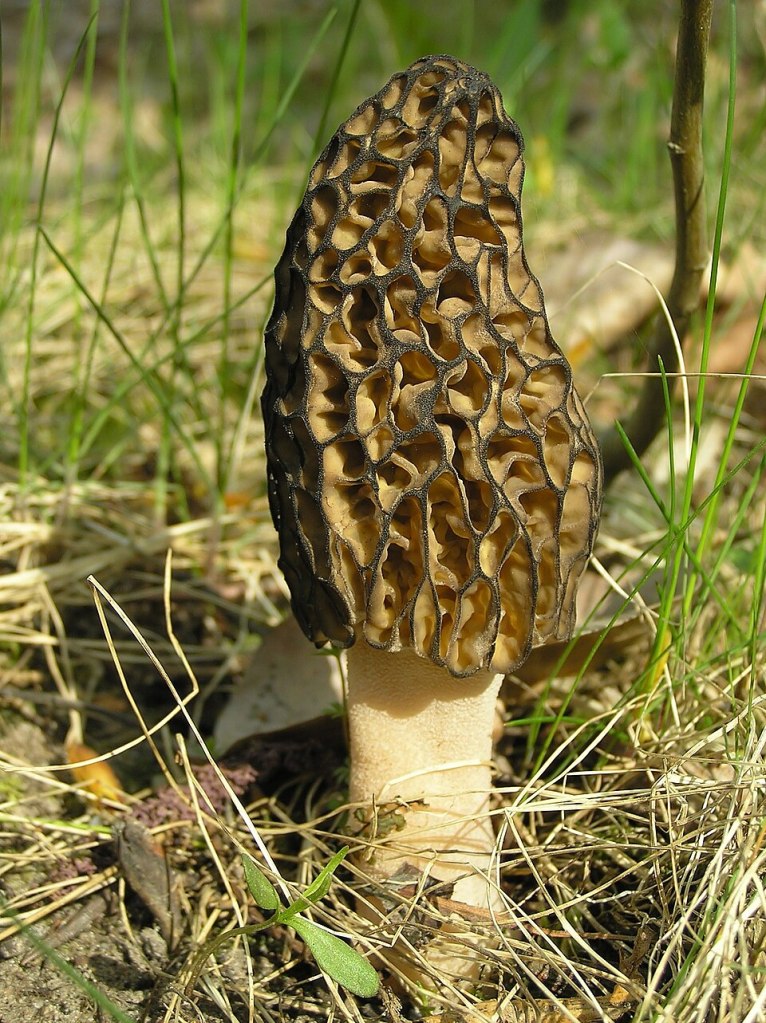
Dried morels make the list because the market price is high. Vendor and market reporting commonly places dried morel mushrooms around $150 to $300 per pound, though lower-grade or alternative supplier pricing can fall into the $25 to $90 per pound range depending on origin and grade.

The caveat is not minor. Commercial morel cultivation is not a reliably established U.S. planted-crop model. Most U.S. supply is still wild-foraged, not field-grown at scale. That means morels belong on this list as a high-value forest-foraging or woodland product, not as a dependable crop you can plant in a conventional field and budget like hops or lavender.
That distinction matters. High price does not equal bankable production. A market exists, but the production model remains unstable.
5. Vanilla
Vanilla still carries a premium price, but the market has cooled sharply from earlier spike years. U.S. wholesale Madagascar vanilla was reported around $72 per pound in October 2026, while a separate farm-direct Grade A report listed about $97 per pound in September 2026. Earlier 2026 retail ranges reached roughly $97 to $225 per pound.
The hard geographic limit is the real story. Vanilla requires a tropical climate. In the United States that means Hawaii and parts of southern Florida only. Domestic production is tiny, and the flowers are typically hand-pollinated. A grower outside those climates can admire the price chart but cannot treat vanilla as an open national opportunity.
The other warning is price volatility. Vanilla’s earlier crisis-era prices pulled in new supply, and later oversupply drove prices down. That is a textbook example of why a high-value crop can still be unstable.
6. Goldenseal Root
Goldenseal is another Appalachian forest-farming crop with a meaningful per-pound price but significant regulatory and biological limits. Bulk wild-harvested root is generally quoted around $25 to $45 per pound, while high-quality wild-simulated root can reach $60 to $120 per pound.

Like ginseng, goldenseal is not a quick annual cash crop. It is a multi-year grow-out enterprise tied to forest conditions, disease pressure, and root quality. In many states, wild harvest is regulated or closely scrutinized. That matters because sellers need legal product and buyers want traceable, compliant supply.
Goldenseal belongs in this ranking because the $/lb metric is real. It does not belong in any discussion that implies every high-price forest botanical is easy money.
7. Hops
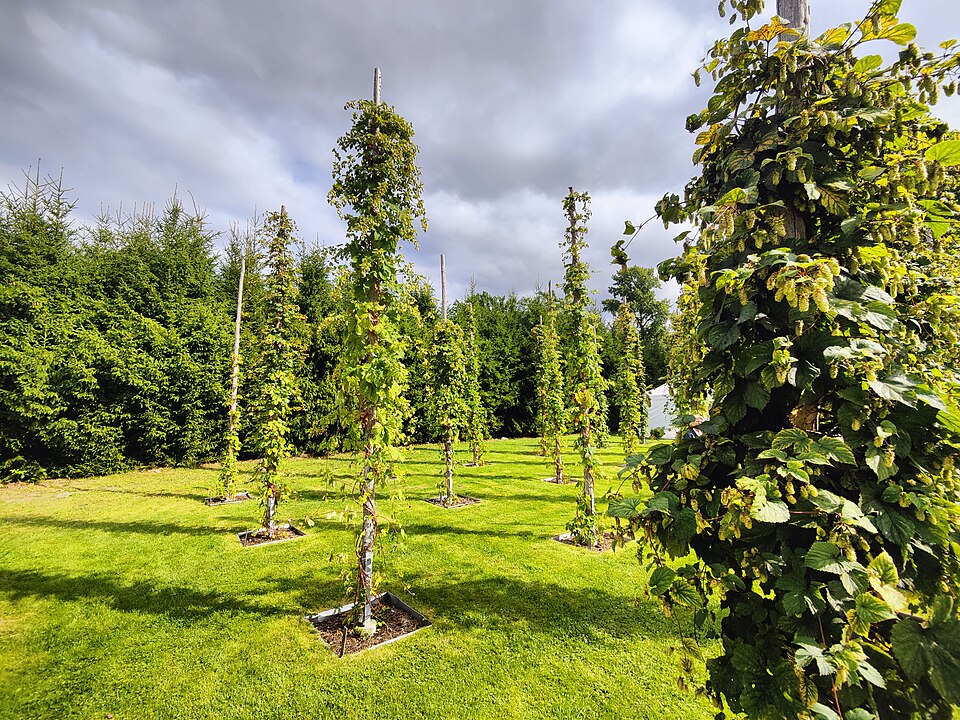
Hops are priced far below saffron or truffles on a per-pound basis, but they deserve inclusion because the business side is more institutionalized. Liberty Natural reported dried whole hops around $38.71 per pound at 5-pound quantities, $37.49 at 10 pounds, and $36.05 at 25 pounds.
The crop is concentrated in the Pacific Northwest, especially Washington, Oregon, and Idaho, which dominate U.S. production. Unlike several crops above, hops have established buyers, contract structures, university extension guidance, and real operating budgets. That lowers some of the informational risk even if the headline $/lb number is modest by comparison.
The honest catch is capital and contracting. Trellis systems, labor, drying, disease management, and access to breweries or processors all matter. Hops are easier to analyze than saffron or truffles. They are not easy to execute.
8. Lavender
Lavender is the realistic entry point on this list. Wholesale dried lavender buds generally run around $16.40 to $30.00 per pound depending on quality, certification, and variety. Culinary-grade product has been quoted around $25.92 per pound at 1-pound volume and roughly $15.32 at 10-pound bulk.

The growing regions are broader than vanilla or truffles. Lavender can work in the Pacific Northwest, the high-desert West, and parts of the Midwest and Northeast depending on drainage, winter conditions, and variety. It also reaches first harvest faster than most of the crops above.
The catch is that raw dried buds alone often do not carry the full economics. Multiple revenue streams usually matter more: fresh bundles, essential oil, on-farm events, U-pick, and agritourism. Lavender belongs on this list not because the raw commodity is spectacular, but because it is one of the more practical specialty-crop entry points.
9. Black Pepper
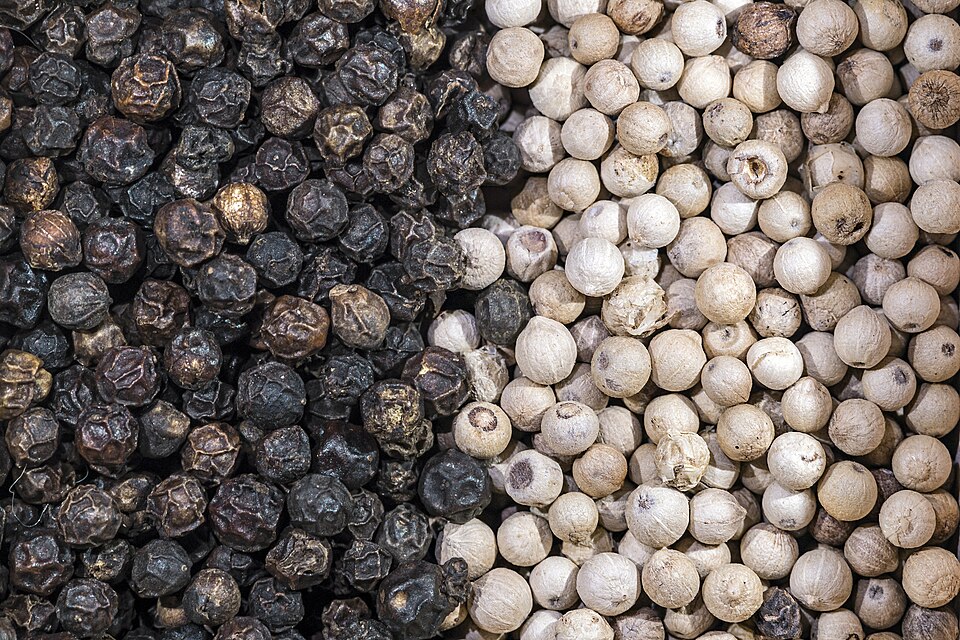
Black pepper is the comparison anchor. October 2026 trade pricing put Indonesian Lampung black pepper around $3.10 per pound and Brazilian ASTA 570 around $2.63 per pound. That is useful because it shows what a global commodity spice earns per pound compared with saffron.
Pepper also makes the geography point. It is not commercially viable across the continental U.S. at scale. So even the universal metric has a gate: a price is only actionable if the crop can actually be grown where the producer is operating.

By design, black pepper ranks last here. It clarifies the economic spread between a commodity spice and an ultra-high-value specialty crop.
Why Value per Pound Is Not Profit
The universal metric in this article is value per pound, not profit per acre. That distinction is the central reality check.
To move from price to a rougher business screen, a second metric is needed: annualized gross value per acre, calculated as:
(marketable yield per acre × price per pound) ÷ years to first meaningful harvest
This is an illustrative calculation built from cited inputs. It is not an official USDA series.
That second step is necessary because the most expensive crop by the pound can still fail economically:
- Saffron can command four-figure prices per pound, but extension baselines point to only about 3 pounds of dried stigma per acre at maturity, and the harvest window is short and hand-labor intensive.
- Truffles can sell near $1,000 per pound, but orchard revenue may not begin for 5 to 13 years.
- Ginseng and goldenseal can post strong root prices, but years of grow-out, mortality, regulation, and quality grading complicate the outcome.
- Morels can post high dried prices, but reliable planted-field production is not established in the U.S.
- Lavender and hops often look less dramatic by the pound but may be more tractable as actual businesses because they have shorter timelines or better market structure.
USDA itself illustrates the data limitation. The agency’s Economic Research Service Commodity Costs and Returns program provides standardized cost-and-return budgets for the principal field crops, not a broad, consistent specialty-crop universe. That is one reason the federal government can tell you a great deal about corn, soybeans, wheat, sorghum, cotton, rice, barley, oats, and peanuts, but much less in a standardized way about saffron, truffles, or goldenseal.
That limitation matters. This ranking is a screening tool, not a conclusive ruling on what a grower should plant.
What Actually Determines Your Profit
The ranking above is a starting point only. Actual profit is determined by a tighter set of variables:
- Marketable yield. A crop with a spectacular $/lb figure can still disappoint if harvested output is tiny, inconsistent, or downgraded.
- Labor availability. Saffron is the clearest example. The stigmas are picked and separated by hand in a narrow harvest window. Labor is not a side issue. It is the business model.
- Established buyers and contracts. Hops often rank below roots and spices on price per pound, yet they may be more financeable because contracts and institutional buyers are more common.
- Climate and geography. Vanilla is effectively limited to Hawaii and parts of southern Florida. Black pepper is the global comparison anchor but not a continental U.S. opportunity. Geography can rule out a crop before economics begin.
- Establishment period and financing cost. Truffles may not produce meaningful revenue for 5 to 13 years. That delay carries financing risk. After the Federal Reserve’s September 16, 2026 rate hike, the target range stood at 3.75% to 4.00%, which directly affects operating loans, orchard establishment financing, and carrying costs.
- Regulatory rules for wild-harvested species. American ginseng is CITES-listed, and both ginseng and goldenseal can involve state harvest rules, certification, season limits, and documentation requirements.
- Price volatility in thin markets. Many of these crops do not trade in deep, transparent commodity markets. Vendor quotes, specialty-buyer lists, and import unit values can diverge sharply. Vanilla’s oversupply-driven decline is a recent warning.
- Post-harvest handling and quality. Drying, curing, grading, storage, root appearance, and contamination risk can materially change the realized price.
In short, the universal metric helps compare crops. It does not replace an enterprise budget, a buyer agreement, or due diligence.
Before You Plant
A ranking like this is context, not a planting recommendation.
Before committing acreage or capital:
- Consult your state extension service and use state-specific production guidance.
- Build a written enterprise budget with realistic labor, drying, curing, grading, and buyer assumptions.
- Confirm a real buyer before planting meaningful acreage.
- Check harvest regulations for anything wild-collected or wild-simulated.
- Stage plantings over time rather than making a single all-in bet on a thin market.
Farmers should also review Why Main Street’s current-events and economy coverage, including reporting relevant to small-business costs, rates, hiring, and entrepreneurship.
Why Main Street is a member-owned platform focused on financial education, entrepreneurship, budgeting, and how to build wealth. Learn more at whymainstreet.org. The platform is not a bank, financial institution, broker, or financial adviser. This article is for general educational and informational purposes. Why Main Street does not guarantee the accuracy, completeness, or applicability of any crop price, buyer quote, trade unit value, extension budget, or profitability estimate. Crop decisions should be reviewed with qualified agricultural, tax, legal, and financial professionals.
Sources
- USDA ERS, Commodity Costs and Returns
- USDA ERS, Farm Sector Income Forecast
- USDA NASS, Crop Values 2025 Summary
- Georgia SARE Project OS23-166, Saffron: A new high-value crop for underserved farmers in Georgia
- University of Vermont, Saffron Production in VT Ecosystem
- University of Vermont, Saffron Brochure
- UN Comtrade Plus, U.S. saffron trade flow data
- Selina Wamucii, Saffron Price in US – August 2026 Market Prices
- Oregon State University, Black Truffle Economics: Evaluating the Costs and Returns of Establishing and Producing in the Willamette Valley, Oregon
- Missouri Extension, Burgundy Black Truffle Cultivation in an Agroforestry Practice
- Springer Nature, Status of truffle science and cultivation in North America
- PBS NewsHour, Americans are farming truffles and finding success. Here’s how
- LPM, Ky farmer dreams of the region becoming the truffle ‘center of the universe’
- USDA Forest Service, Economics and Marketing of Ginseng
- USDA Forest Service, Costs and returns of producing wild-simulated ginseng in established tree plantations
- Wisconsin Extension, Grow American Ginseng in Your Woods
- Heil Ginseng, How Much Is American Ginseng per Pound?
- Tridge, Global Dried Morel Mushroom Price
- Lykyn, Morel Mushroom Cost and Price: 2026 US Market Guide
- Amadeus Vanilla Beans, Vanilla Bean Prices 2026 | Farm-Direct Market Report
- Tridge, Vanilla Bean Market Overview
- Tridge, Vanilla Bean Monthly Update Aug 2026
- Tridge, Dried Hop Market Overview
- Liberty Natural
- HerbCo
- Van Gogh Lavender
- Tridge, Dried Lavender Market Overview
- Federal Reserve, Open Market Operations and Policy Releases


Leave a Reply