
Gen Z is making a private financial calculation public.
The phrase is simple: “I can’t afford that.” The practice has acquired a name: loud budgeting: and it is moving from social media into everyday conversations about dinners, concerts, travel, salaries, debt and savings.
The trend is not merely a viral slogan. It is a response to high housing costs, expensive groceries, volatile interest rates and thin emergency savings. It is also a direct challenge to the assumption that financial limits should remain hidden.
According to Bank of America’s 2026 Gen Z & The Cost of Adulting report, 42% of Gen Z practice loud budgeting. The figure is unchanged from 2025, when it was also 42%, and higher than the 38% reported in 2024. The same study found that 60% of Gen Z discuss money with friends, including salary,…
The figures have also been reported by outlets including The Independent’s money coverage, AOL and other financial publications.
What loud budgeting actually means
Loud budgeting means openly stating what you can and cannot afford instead of silently overspending to maintain appearances.
It can involve declining a restaurant invitation because the price does not fit your monthly plan. It can mean telling friends that a weekend trip is outside your budget. It can also involve proposing a lower-cost alternative rather than abandoning the social connection altogether.
A typical statement sounds like this:
> “That dinner is not in my budget this month, but I would be happy to meet for coffee or cook together at home.”
The distinction matters. Loud budgeting is not necessarily a declaration of poverty. It is a statement of financial priorities and capacity.
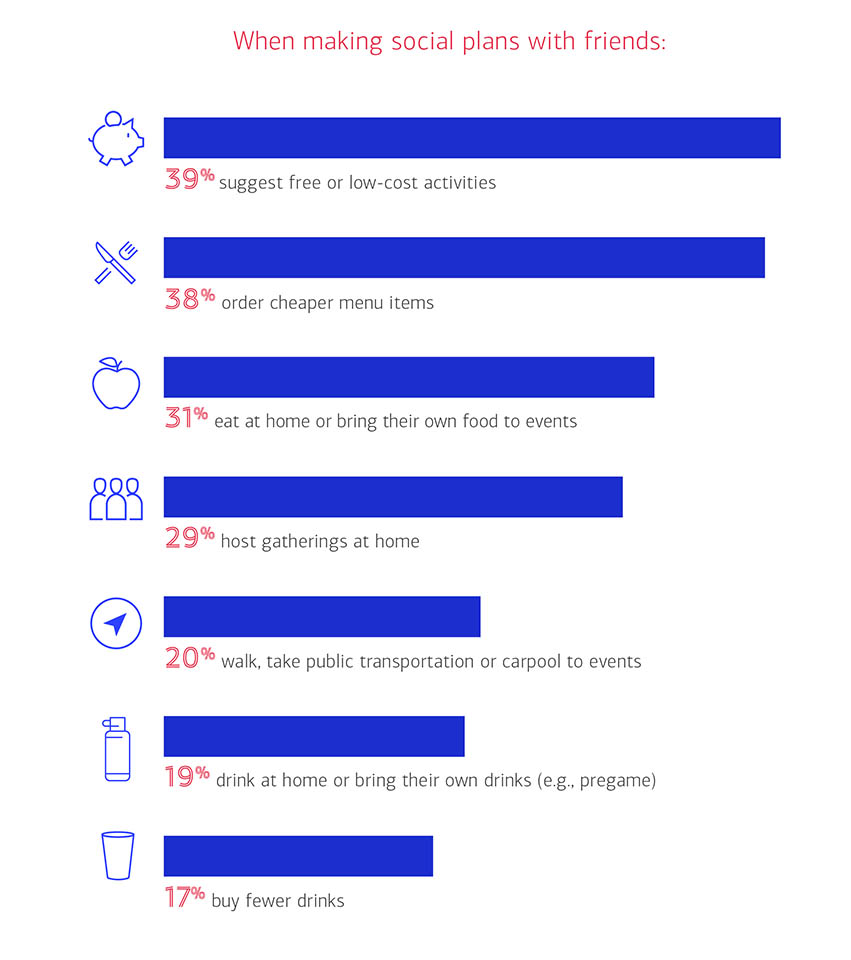
Bank of America’s 2026 findings show that 75% of Gen Z take active steps to save money when making social plans. Those steps include suggesting free or low-cost activities, ordering less expensive menu items, eating at home before an event and hosting gatherings at home.
The economic pressure behind the trend is measurable. Bank of America reported that 42% of Gen Z live paycheck to paycheck, while 49% identify the high cost of living as a top barrier to financial success. Housing and rent remain major obstacles for nearly 30% of respondents.
The research also found that 66% of Gen Z are saving in some form. However, saving participation does not mean that every person has a large financial cushion. Many young adults are attempting to save while managing rent, transportation, education, healthcare and debt payments.
Data from PYMNTS Intelligence has similarly emphasized Gen Z’s focus on emergency funds and near-term financial stability. A reported 32% identify building an emergency fund as a primary savings goal.
Why loud budgeting works psychologically
Loud budgeting changes the emotional structure of a money decision.
Traditional budgeting is often private. A person reviews a bank account, feels anxious about the balance and then tries to conceal the problem. That secrecy can create shame. Shame can lead to avoidance, emotional spending or further isolation.
Loud budgeting removes some of that pressure by turning a financial boundary into a clear statement.
MoneyLion describes the practice as sharing financial goals and limits with trusted people to create accountability. Its guidance emphasizes that accountability should be supportive rather than punitive. Readers can review MoneyLion’s loud-budgeting guide and its budgeting resources for additional information. These are partner-resource links; terms, eligibility and availability may apply.
Three psychological mechanisms explain the appeal:
1. It removes shame
“I cannot afford that” is a factual statement. It does not establish that someone is irresponsible, unsuccessful or less deserving of social participation.
That distinction is important. A person may have income but still reject an expense because the money is reserved for rent, debt repayment, an emergency fund or a future purchase.
The MoneyLion guidance on emotional spending also warns against shame-based financial decisions. A budget should identify patterns and priorities. It should not function as a moral judgment.
2. It creates social accountability
Once a person tells friends that they are saving for an emergency fund or paying down a credit card, the goal becomes visible. Supportive friends can help protect that boundary.
This is not a guarantee of better financial outcomes. It is a behavioral tool. The person has created a pause between the invitation and the purchase.
That pause can prevent a short-term decision from undermining a longer-term objective.
3. It establishes boundaries
A direct answer limits negotiation. It also gives other people useful information.
When someone says, “I am not spending more than $30 tonight,” the group can choose a restaurant that fits the limit. When a person says, “I am not buying gifts this year, but I would like to spend time together,” expectations become clearer.
Loud budgeting is therefore a communication practice as much as a budgeting practice.
How to practice loud budgeting
The method does not require publishing a bank statement or disclosing an exact salary. It requires a clear budget and controlled disclosure.
Use specific scripts
For declining an invitation:
- “I am keeping discretionary spending low this month, so I am going to skip this one.”
- “That is outside my current budget, but I would like to find a cheaper option.”
- “I am prioritizing debt repayment right now. Can we do something free or low-cost?”
- “I cannot commit to that expense today. Let me check my plan first.”
For suggesting an alternative:
- “Could we host dinner at home instead?”
- “I can spend $20, but not $60. Is there a place that fits?”
- “I am saving for an emergency fund. Want to take a walk or meet for coffee?”
The wording should be direct, not apologetic. A boundary is not a request for permission.
Separate needs, wants and goals
A workable loud-budgeting plan begins with the numbers. List fixed expenses, variable expenses, debt payments, savings and discretionary spending.
Then separate:
- Needs: housing, food, utilities, transportation and required payments.
- Wants: dining out, entertainment, shopping and optional subscriptions.
- Goals: emergency savings, debt reduction, investing, education or a business fund.
The categories are not statutory classifications. They are practical tools. Circumstances differ, and a rigid formula may not fit every household.
Bank of America’s financial education resources include guides on saving and budgeting, managing bills and starting to invest.
Discuss salary carefully
The broader money conversation includes salary transparency. Bank of America reported that 27% of Gen Z discuss salary with friends, while 24% discuss financial stress.
Salary discussions can help workers identify pay disparities, prepare for negotiations and understand market rates. They can also expose sensitive information. People should decide what to share, with whom and for what purpose.
Debt balances, account numbers, tax documents and payment credentials should not be disclosed casually or posted publicly.
The criticism: loud budgeting is not a cure for low income
Critics argue that loud budgeting can become performative. A person can discuss saving every day and still lack enough income to cover basic costs.
That criticism is valid.
Loud budgeting cannot lower rent by itself. It cannot eliminate medical debt, increase wages or replace public policy. It cannot convert an unaffordable housing market into an affordable one.
There are also privilege blind spots. Saying “just skip the event” is easier for someone with stable housing, family support and flexible work than for someone facing isolation, childcare costs or an unpredictable schedule.
Oversharing presents another risk. Publicly discussing money can invite judgment, manipulation or unwanted financial advice. The safest approach is selective transparency: share goals and spending boundaries without disclosing information that could compromise privacy or security.
Small businesses have used the strategy for decades
The trend is new as a cultural label. The underlying tactic is not new.
In The Guardian, columnist Gene Marks reported that small business owners have practiced loud budgeting for decades. Owners tell suppliers, landlords and service providers when proposed prices do not fit cash flow. They request lower fees, better terms or delayed payments.
The business version is more formal:
- “Those payment terms do not work for our cash flow.”
- “We can approve $X, not $Y.”
- “Can you offer a lower-cost option?”
- “We need the revised price in writing before proceeding.”
The tactic can create leverage. It can also damage relationships if used dishonestly or aggressively. Transparent negotiation requires accurate information, written terms and good-faith dealing.
Why Main Street’s role in the conversation
Why Main Street is a member-owned social media company focused on financial education, discussion and wealth building. Its platform is designed to give members a place to learn about money, discuss financial topics and connect with financial professionals who may use the platform.
That mission fits the loud-budgeting trend. Financial education is not limited to investment terminology or account balances. It includes the language people use when setting limits, comparing options and making decisions under pressure.
Members can explore the Why Main Street News section and related budgeting coverage, including [the three-in-one grocery shopping method](https://whymainstreet.org/news_article_view_page_public/i-used-the-“3-in-1”-grocery-shopping-method-and-cut-my-budget-in-half-: -1715030145557×352786163615399940).
Why Main Street is not a bank, financial institution or financial advisor. It does not guarantee the accuracy, completeness or timeliness of third-party information. Nothing in this article is legal, tax, investment or individualized financial advice. Readers should verify information and consult a qualified professional before making financial decisions.
Loud budgeting is not a statutory remedy for financial hardship. It is a communication strategy. Used carefully, it can reduce shame, make social expectations clearer and help people protect money reserved for their actual priorities.
Join on web and take part in the conversation!
Sources
- Bank of America: 2026 Gen Z & The Cost of Adulting
- Bank of America Better Money Habits: Gen Z Financial Guide
- The Guardian: Gen Z calls it ‘loud budgeting’; small business owners have been doing it for decades
- MoneyLion: What is loud budgeting?
- AOL: Loud budgeting and related Gen Z money trends
- PYMNTS
- The Independent: Money coverage


Leave a Reply